

Ever since I was a little girl, I have loved trees. There were two apple trees in our backyard, and I loved climbing them. Some days, I would spend hours sitting in one of those trees. My eye is drawn to all kinds of trees. They display beauty in different ways — in their trunks, branches, and leaves. I also enjoy the diversity of trees around the world.
In Psalm 92, the psalmist presents two very different trees — the palm trees and the cedars of Lebanon — to illustrate what a righteous life is like.
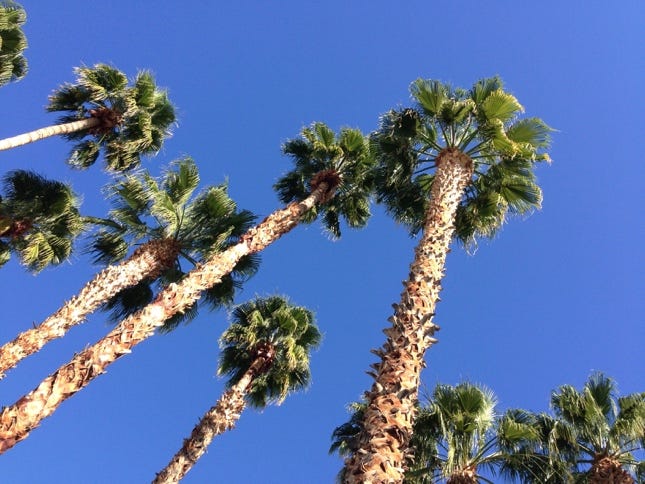
But the godly will flourish like palm trees and grow strong like the cedars of Lebanon. For they are transplanted to the Lord’s own house. They flourish in the courts of our God. Even in old age they will still produce fruit; they will remain vital and green.
- Psalm 92:12-14 (NLT)
The Two Trees Will Flourish and Grow Strong
First, I must admit that I am fascinated with palm trees (but I digress). Here are some interesting facts about the palm tree and the cedar of Lebanon.
The palm tree bends. It thrives in harsh, dry places and, rather than resisting the wind, it yields to it. It’s resilient because it’s flexible, not because it’s rigid.
“The godly will flourish like palm trees.”
However, the cedar of Lebanon is the opposite — massive, deeply rooted, towering, and renowned throughout the ancient world for its strength and longevity. Solomon built the temple from cedar. Kings prized it. It stood for permanence.
“The godly will … grow strong like the cedars of Lebanon.”
The Trees are Planted
Palm and cedar. Flexibility and strength. Both are named here as pictures of flourishing — and they share one thing in common: where they’re planted. Verse 13 tells us plainly: “planted in the house of the Lord.”
When we read that phrase, we may picture a building — a physical temple, a place you must travel to. But that’s not what is described here. “The house of the Lord” describes nearness to God Himself — a life oriented around worship, praise, prayer, and time in His Word. In Psalm 23, David wrote that he would “dwell in the house of the Lord forever” — he didn’t expect to live inside a building. He expected to live in unbroken closeness with God.
Your heart’s desire is to be rooted in the Lord. These elements include:
Offering Him worship, praise, and words of thanks each day (Ps. 95:6).
Bringing your requests and burdens to Him in prayer (Ps. 17:6).
Reading your Bible and meditating on God’s Word (Ps. 1:2).
Flourish in God’s Courts
That’s the key to the whole passage. A tree doesn’t flourish because of what’s happening above ground — the weather, the wind, the season. It flourishes because of what’s happening below ground, out of sight, where the roots draw life from the soil, water, and minerals that remain stationary.
Worship, prayer, and the Word create a rich, nourishing environment. They are available to you anywhere — in your car, in your kitchen, or at your desk — because they are not about location. Each offers believers an opportunity to connect with the Lord and flourish in their personal relationship with Him.
Bear Fruit in Old Age
Verse 14 makes a promise that’s easy to skim over: “they will still bear fruit in old age.” Not just in youth, not just in the vigorous years, but in old age — in seasons that culture tells us are for slowing down and stepping back.
Fresh, green, and still producing. These verses do not hand us a portrait of a withering, dried-up life. Rather, we see a life that remains vibrant because its source of nourishment never runs dry. Your days may look different, but the Lord will provide life and new opportunities to serve Him and love others.
For each of us devoted to God, this promise is worth holding onto — through a career pivot, a new venture, the ordinary weariness of midlife, or any season when you wonder whether you still have something to offer. If you are planted in Him, you are not past your fruitful years. You can flourish and bear fruit.
Head to Heart
Where are you planted?
Take an honest inventory. Is your daily rhythm truly oriented toward worship, prayer, and Scripture — or has it drifted toward busyness, performance, or distraction?
What would it look like to replant yourself more deeply in Him this week?
Consider your flexibility.
In what area of your life do you need to be more like the palm tree — flexible, bending rather than breaking under pressure?
Are you trusting in God’s strength to hold you steady as you flex?
Consider your strength.
In what area do you need to be more like the cedar — deeply rooted, steadfast, and strong for the long haul?
Is there an area where you need the deep roots of cedar — a commitment or calling that requires staying power rather than a quick response?
Reframe “old age.”
Are you believing a lie that your most fruitful season is behind you?
What would it look like to trust God for fruitful days in this season of life?
If you’re in a season of change or feel your most productive years are behind you, let this passage push back against doubt or despair. Fruitfulness isn’t reserved for one season of life. What would it look like to trust God for fruitful days in this season?


Discover God’s Truth is now on YouTube

Watch, share, and subscribe at youtube.com/@discovergodstruth.
In this time of my life, this was a great encouragement!